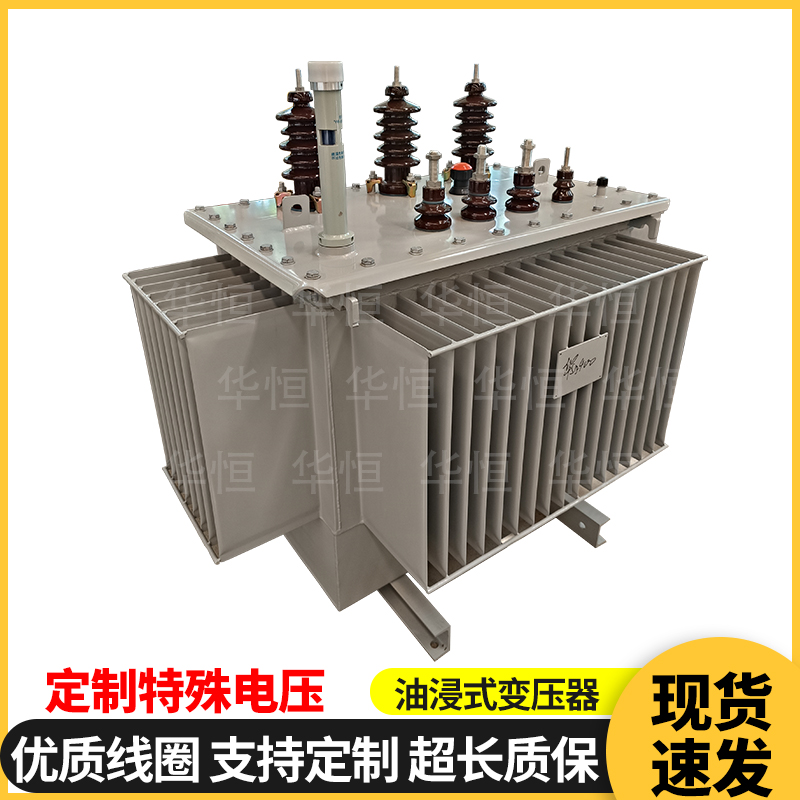
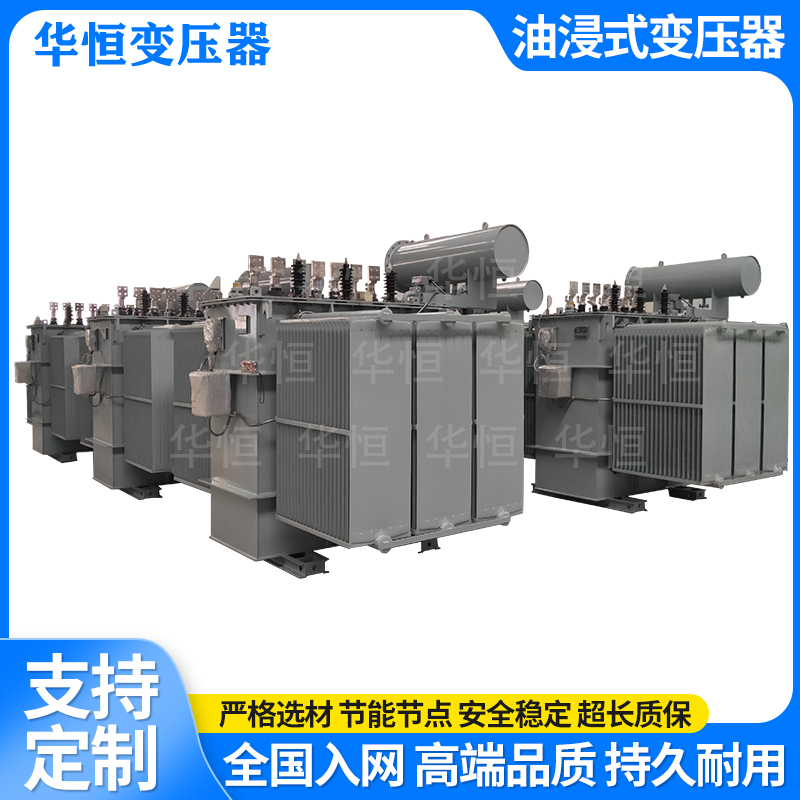
Oil-immersed transformers are core equipment in power systems, relying on transformer oil for insulation and heat dissipation. They are particularly suited for high-capacity, high-voltage applications such as urban substations or industrial power supply. Their core structure includes critical components like the core, windings, tank, oil conservator, and gas relay.
- Core Features:
Cooling and Insulation: Transformer oil serves dual functions of heat dissipation and insulation. During operation, the top layer oil temperature typically does not exceed 85°C, with a short-term maximum of 90°C. - Cooling Methods:
Common approaches include natural cooling, forced air cooling, and forced oil circulation. - Advantages:
Excellent insulation properties, high heat dissipation efficiency, low cost, and minimal operational noise. - Disadvantages:
Oil is flammable, necessitating strict fire and explosion prevention measures. It also poses potential environmental impacts.